



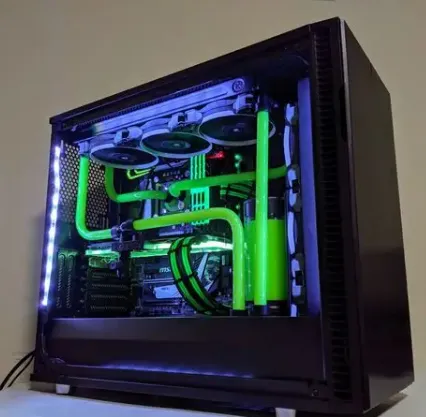
If you’ve spent any time exploring high-performance PC builds, you’ve probably noticed how often custom water-cooling comes up. It’s a trend that has grown rapidly, especially among gamers, content creators, and hardware enthusiasts who want to squeeze every bit of performance out of their systems. Beyond the impressive visuals, though, the big questions remain: Is custom water cooling actually safe, and is it worth the money?
In this post, we’ll break down what custom water cooling is, how it works, why people love it, and what drawbacks you should consider before jumping in.
What Exactly Is a Custom Water-Cooled PC?
At its core, a water-cooled PC replaces traditional air cooling with a liquid-based system designed to move heat away from major components more efficiently. Instead of relying on heatsinks and fans alone, liquid coolant cycles through blocks attached to heat-producing parts like the CPU and GPU.
A typical setup includes:
- Water blocks that sit on the CPU, GPU, or other components
- A pump that drives coolant through the loop
- A radiator that releases heat from the warmed liquid
- A reservoir that stores extra coolant
- Tubing to connect everything
- Coolant formulated to prevent corrosion and transfer heat effectively
As the coolant circulates, it absorbs heat from the hardware, moves it to the radiator to be cooled, and repeats the cycle. The result is a stable temperature even during extended heavy workloads.
Why Enthusiasts Are Choosing Custom Water Cooling
Superior Temperature Control
Water cooling excels at keeping temperatures low and stable, especially when hardware is under load. This gives users more headroom for overclocking and helps maintain long-term component health.
Aesthetic Appeal
Custom loops are often visually stunning. Clear tubing, colored liquids, and synchronized lighting can turn a PC into a showpiece. Many builders treat water-cooled setups as both performance machines and functional art.
Lower Noise Levels
Because water cooling dissipates heat efficiently, it doesn’t rely on high-RPM fans. For users who prefer quiet workspaces or recording environments, this can be a major advantage.
Drawbacks to Keep in Mind
High Upfront Cost
A custom loop is significantly more expensive than an air-cooled build. Pumps, blocks, radiators, coolant, and fittings add up fast. It’s important to consider whether the extra cooling power justifies the additional cost for your use case.
Maintenance Requirements
This is not a “set it and forget it” system. Water-cooled PCs require regular upkeep, including inspecting for leaks, replacing coolant, and keeping the loop clean. Neglecting maintenance can lead to performance issues—or worse.
Risk of Leaks
Although rare when components are installed correctly, leaks are a risk. A single loose fitting or cracked tube can lead to hardware damage if not caught early. Careful assembly and routine checks are essential.
Is Custom Water Cooling Safe?
With the right precautions, custom water cooling is generally very safe. The key is to approach the build with patience and attention to detail.
Recommended Precautions Include:
- Choosing high-quality parts from trusted manufacturers
- Ensuring all fittings and tubes are properly connected
- Performing a leak test before turning the system on
- Maintaining the system regularly
- Keeping the PC clean and well-ventilated
Common issues like algae growth, coolant breakdown, and pump failure can be avoided by following basic care guidelines and inspecting the system periodically.
Is It Worth the Investment?
Whether custom water cooling is worth the cost depends largely on your goals and how you use your PC.
Custom Cooling Is Ideal For:
- Gamers who push hardware to its limits
- Content creators running demanding applications
- PC modders who value aesthetics
- Overclockers seeking consistent, stable temperatures
You May Not Need It If:
- Your daily usage is light or moderate
- You are working within a strict budget
- You prefer minimal maintenance
- You aren’t comfortable assembling or maintaining hardware
A high-quality air cooler is more than sufficient for most users and requires far less care.
Final Thoughts
Custom water cooling can transform a PC into a high-performing, visually impressive machine. It delivers exceptional thermal control, reduces noise, and opens the door to creative and eye-catching designs. However, it also comes with a higher price tag and requires ongoing maintenance.
If you enjoy building, tweaking, and caring for your system, a custom water-cooled PC can be both rewarding and practical. If not, traditional cooling still provides reliable performance for everyday use.
