



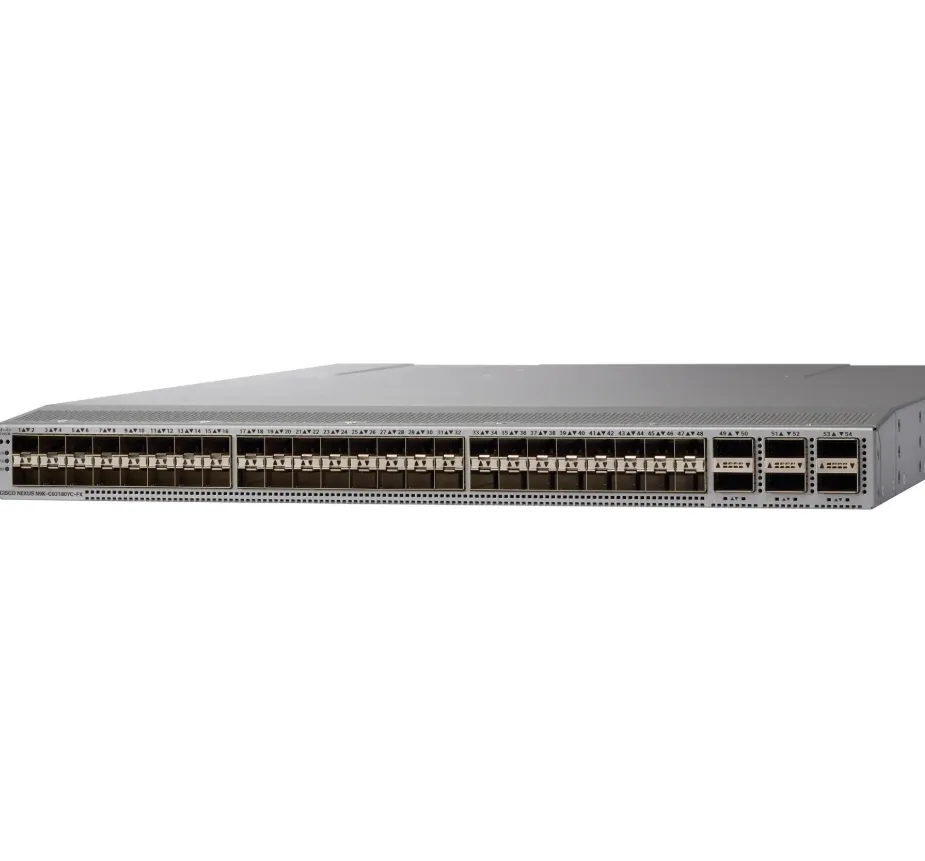
The growing reliance on cloud computing, big data, and high-bandwidth applications has driven the need for faster, more efficient network infrastructure. Among the key innovations addressing these demands is 40 Gigabit Ethernet (40GbE) — a major advancement in network speed and performance that bridges the gap between 10GbE and 100GbE. Built on the IEEE 802.3ba standard, 40GbE offers a scalable and cost-effective solution for organizations seeking enhanced speed, reliability, and scalability.
What Is 40 Gigabit Ethernet?
40 Gigabit Ethernet, commonly called 40GbE, is a high-speed networking standard capable of transferring data at 40 gigabits per second. Introduced in 2010, it was designed to meet the exponential increase in data traffic within data centers, enterprises, and service provider networks. While 10GbE had been sufficient for years, the rapid expansion of digital workloads created the need for a more powerful alternative — and 40GbE became the natural step forward before the jump to 100GbE.
How 40GbE Works
Unlike lower-speed Ethernet, 40GbE achieves higher performance by transmitting data across multiple parallel lanes. Typically, it uses four lanes, each carrying 10Gbps, to achieve an aggregated throughput of 40Gbps. This parallel structure allows for efficient, high-capacity communication with minimal delay.
Core components of a 40GbE setup include:
- Cabling options:
- Copper (QSFP+) – ideal for short distances within racks or between nearby switches.
- Multimode fiber (MMF) – suited for medium distances, such as connections between data center rows.
- Single-mode fiber (SMF) – used for long-distance communication across facilities or buildings.
- Transceivers:
The QSFP+ (Quad Small Form-factor Pluggable Plus) transceiver is the standard for 40GbE, converting electrical signals into optical ones for high-speed transmission. - Parallel optics:
This technology enables simultaneous data transmission across multiple channels, a key factor in achieving 40GbE speeds.
Benefits of 40 Gigabit Ethernet
1. Superior Speed and Bandwidth
40GbE delivers four times the speed of 10GbE, supporting demanding applications such as cloud services, 4K video streaming, and high-frequency trading with ease.
2. Scalability for Future Growth
As network demands expand, 40GbE offers a seamless upgrade path to 100GbE. It allows organizations to scale their network infrastructure without replacing existing systems entirely.
3. Enhanced Efficiency in Data Centers
By reducing bottlenecks between servers and switches, 40GbE optimizes resource utilization, resulting in improved performance and energy efficiency across data center environments.
4. Low Latency Performance
Applications that require instant responsiveness — like financial systems, VoIP, and online gaming — benefit from the minimal latency provided by 40GbE connections.
5. Better Virtualization Support
With multiple virtual machines running on a single server, bandwidth demand increases dramatically. 40GbE ensures these virtualized environments operate without interference or lag.
6. Long-Term Cost Savings
Though initial investments may be higher, 40GbE reduces the need for multiple 10GbE connections, cutting down on cabling, energy use, and maintenance expenses over time.
Common Applications
Data Centers:
Modern data centers rely on 40GbE to connect servers, storage systems, and switches. The standard provides the bandwidth necessary to handle large-scale data transfers efficiently.
High-Performance Computing (HPC):
Scientific research, engineering simulations, and AI workloads demand high-speed communication between computing nodes. 40GbE ensures reliable, high-bandwidth connections for these complex environments.
Telecommunications:
As 5G and IoT continue to expand, telecom providers depend on 40GbE for backbone connections that can handle growing data volumes with consistent performance.
Cloud Services:
Cloud-based platforms and SaaS providers use 40GbE to deliver smooth, responsive service to millions of users simultaneously.
Enterprise Networks:
Large businesses employ 40GbE to link core switches and data systems, supporting real-time collaboration, video conferencing, and large file transfers.
40GbE vs. Other Ethernet Standards
- 10GbE: Still widely used but increasingly limited for modern data loads.
- 40GbE: A balanced option for organizations seeking a boost in capacity without the high cost of full 100GbE adoption.
- 100GbE: The emerging standard for large-scale networks, though it remains more expensive and power-intensive.
Challenges to Consider
Despite its benefits, implementing 40GbE presents some challenges:
- Higher initial costs due to transceivers, switches, and compatible hardware.
- Increased power consumption, especially in dense data center environments.
- Complex cabling management, as parallel fiber arrangements require careful organization.
- Upgrade planning, since some organizations may prefer transitioning directly to 100GbE.
The Role of 40GbE in the Future
Although 100GbE and faster standards are gaining traction, 40GbE continues to serve as a reliable and cost-effective solution for many enterprises. It remains especially valuable in hybrid networks, where both 40GbE and 100GbE operate together to balance cost and performance. For mid-sized businesses and growing data centers, 40GbE provides a strong combination of speed, scalability, and affordability.
Conclusion
40 Gigabit Ethernet stands as a milestone in the progression of network technology, offering the perfect balance between performance and practicality. Delivering four times the speed of 10GbE, it empowers organizations to manage growing data demands with ease and reliability. While 100GbE is paving the way forward, 40GbE remains an essential, future-ready solution for businesses seeking high-speed networking without the need for a complete infrastructure overhaul.
