



Reliable communication is essential in both military and marine settings, where systems must function flawlessly despite extreme and unpredictable conditions. Fiber optic cables are central to these networks, but not every cable is designed to handle the harsh environments found on ships, in combat zones, or beneath the ocean’s surface. Selecting the right optical cable can determine whether a mission runs smoothly or encounters costly, mission-critical failures.
This guide outlines the environmental challenges, cable types, and selection criteria that matter most when designing fiber networks for demanding defense and maritime applications.
Understanding the Environmental Challenges
Military and marine operations expose communication cables to stresses far beyond what traditional systems encounter. These may include:
- Saltwater corrosion on naval vessels and underwater systems
- Constant vibration and shock on armored vehicles, aircraft, and ships
- High pressures and moisture when installed below sea level
- Abrasion and crushing during field deployment
- Electromagnetic interference in combat and surveillance zones
- Wide temperature swings from arctic conditions to desert climates
Any cable installed in these environments must be engineered to withstand mechanical, chemical, and environmental stress while maintaining stable optical performance.
Key Factors to Consider When Selecting Optical Cables
1. Environmental Resistance
Cables should be designed to endure the specific conditions of the deployment location. Look for resistance to:
- UV exposure during outdoor installation
- Saltwater and chemical contact
- Moisture penetration
- High or low temperatures
Marine systems often require watertight, armored constructions, while ground-based military applications rely on rugged jackets that stand up to dust, mud, and impact.
2. Mechanical Protection
Durability is vital for cables that may be handled aggressively or installed in mobile systems. Important features include:
- Crush and abrasion resistance
- Protection against rodent damage
- Ability to survive repeated coiling and rapid deployment
Tactical fiber optic cables typically use polyurethane jackets and reinforced strength members to ensure long-term stability.
3. Deployment Method
Cable selection depends on whether the installation is temporary or permanent:
- Permanent runs: Armored and double-jacketed options offer extra protection
- Field-deployable systems: Lightweight, flexible tactical cables allow fast setup and teardown
- Underwater networks: Pressurized or heavily armored submarine cables provide unmatched reliability
Each scenario requires a balance of strength, flexibility, and handling ease.
4. Optical Performance Needs
Ensure that the cable supports your bandwidth and distance requirements:
- Single-mode fiber is the standard for long-range and high-capacity defense networks
- Multimode fiber suits shorter paths within ships, aircraft, or command centers
Low attenuation and low back reflection are especially important for laser-based military communication systems.
Cable Types Commonly Used in Military and Marine Systems
Tactical Fiber Optic Cables
Built for rugged field use, these cables are flexible, strong, and easy to deploy without special tools. They are widely used in mobile command posts, radar systems, and communications vehicles.
Armored Subsea Fiber Cables
Designed for underwater installations, these cables feature multiple steel layers, water-blocking materials, and pressure-resistant structures. They form the backbone of deep-ocean surveillance and long-distance communication networks.
Hybrid Fiber-Power Cables
These combine power conductors and optical fibers in one assembly, saving space and reducing weight—an advantage in aircraft, naval platforms, and unmanned systems.
Tight-Buffered Shipboard Cables
Used in confined spaces such as ship interiors or submarine corridors, these cables offer strong mechanical protection, flame resistance, and moisture protection.
Standards and Certifications to Prioritize
To ensure safety and compatibility, cables should meet established defense and marine specifications, including:
- MIL-STD requirements for tactical, aviation, and battlefield use
- IEC and ITU performance standards
- NEK 606 or UL shipboard fire-resistance ratings
- RoHS and REACH compliance for safe material use
- TFOCA connector systems for harsh-environment field termination
Selecting products that meet these standards ensures long-term reliability in mission-critical systems.
Why Custom Cable Solutions Are Often Necessary
Military and naval systems rarely share identical requirements. Custom-engineered fiber cables may be needed to address:
- Limited routing space
- Specialized connector systems
- Unique mobility requirements
- Specific distance or bandwidth needs
- Custom jacketing or armor for environmental protection
Tailored solutions offer improved performance and integration compared to off-the-shelf cables.
Best Practices for Handling and Deployment
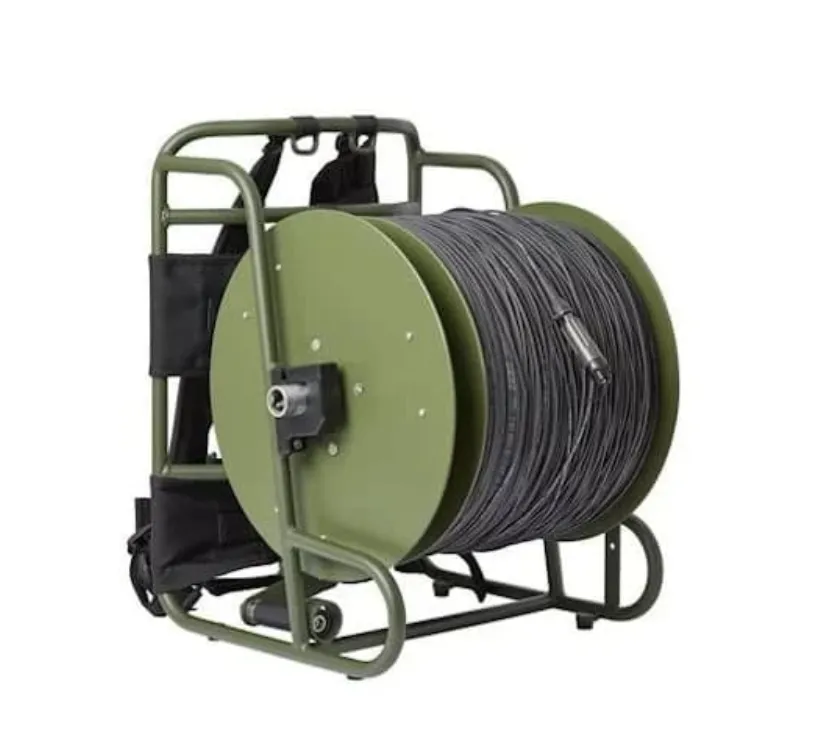
- Use proper reels for storage and deployment to avoid bending damage
- Inspect jacket surfaces and connectors regularly for corrosion or wear
- Keep cables stored in controlled temperatures when possible
- Use tactical deployment kits for rapid field use
- Label routes and maintain documentation for permanent installations
Proper care extends the life of the cable and helps maintain performance in demanding environments.
Real-World Examples of Fiber Use in Defense and Marine Systems
Shipboard Networks
Fiber connects radar systems, communications equipment, and navigation systems, requiring flame-resistant and corrosion-resistant cables.
Mobile Military Bases
Portable tactical fiber reels support fast deployment and frequent repositioning under rugged field conditions.
Subsea Surveillance
Deep-ocean cables equipped with multiple armor layers withstand pressure, abrasion, and marine activity while supporting long-range intelligence systems.
Conclusion: Select Fiber Built for the Mission
In military and marine applications, the performance of the communication system depends heavily on choosing the right fiber cable. Reliability, environmental protection, mechanical strength, and compliance are far more important than cost alone.
By evaluating environmental factors, cable construction, optical performance, and compliance standards, teams can design networks that support critical operations—even in the harshest conditions. The right optical cable doesn’t just transmit data; it ensures mission success where failure is not an option.
