



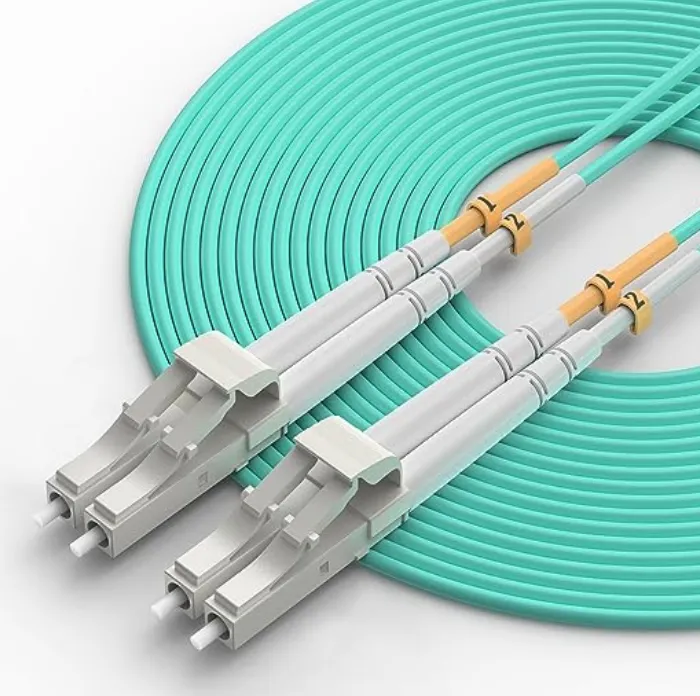
Modern fiber optic networks rely on the right type of cabling to deliver fast, reliable communication. Multimode fiber (MMF) is widely used for shorter connections, while single-mode fiber (SMF) dominates long-distance, high-capacity transmission. As network demands grow, many organizations look to shift from multimode to single-mode systems to improve performance and prepare for future expansion. This guide breaks down the core differences between the two fiber types and explores several effective approaches for making the transition.
Understanding the Key Differences
MMF and SMF serve different purposes, largely because of their physical and optical characteristics.
Multimode fiber features a broad core, typically 50 or 62.5 microns wide, which allows multiple light paths to travel simultaneously. While this design works well over shorter distances, it introduces modal dispersion that limits performance on long runs. Single-mode fiber, with a core around 8–10 microns, carries light along a single path. This eliminates modal dispersion and supports far greater distances, often extending tens or hundreds of kilometers. Although multimode cabling is usually less expensive to install, single-mode fiber offers greater scalability and higher long-term capacity.
Ways to Convert Multimode Fiber to Single-Mode
There are several methods to bridge MMF and SMF systems, each with its own strengths and considerations.
Using Media Converters
Media converters provide one of the simplest ways to connect multimode and single-mode segments. These devices take in a multimode signal, convert it, and transmit it through a single-mode output. They are compatible with various standards and data rates, making them useful in environments where replacing existing cabling isn’t practical.
To use a media converter, connect the multimode cable to its designated port, attach the single-mode cable to the output port, and power the unit. Once active, it enables seamless communication between the two fiber types.
Mode Conditioning Patch Cables
A mode conditioning patch cable is another helpful option, especially in applications like 1000BASE-LX. These specialized cables offset the incoming multimode signal before it enters the single-mode core, reducing distortion and improving signal quality. They are commonly deployed when multimode and single-mode equipment must work together without introducing excessive errors.
Optical Transponders
For large-scale networks or long-distance links, optical transponders can offer a more robust solution. These units perform optical-electrical-optical conversion, regenerating the signal and enabling smooth transition between MMF and SMF. They also provide wavelength conversion, making them valuable in advanced transport networks.
Leveraging Wavelength Division Multiplexing
Wavelength division multiplexing (WDM) systems combine multiple wavelengths onto a single fiber, improving overall efficiency. When paired with the appropriate transceivers, WDM can support multimode-to-single-mode transition while maximizing available fiber capacity and reducing the number of physical cables needed.
Upgrading the Cabling System
In some situations, the most effective solution is a full upgrade to single-mode fiber infrastructure. Although this approach requires a larger upfront investment, it provides superior performance, improved longevity, and better support for future network growth.
Challenges to Consider
Switching from MMF to SMF introduces several technical and financial challenges.
Because the two fibers have different numerical apertures, connecting them directly can result in significant signal loss. Proper conditioning and regeneration are essential to maintain signal integrity. Compatibility is another concern—not all devices support both fiber types, so upgrading hardware such as switches or transceivers may be necessary. Cost is also a factor, as converters and transponders add investment, and full infrastructure upgrades require careful planning and budgeting.
Best Practices for a Successful Transition
Begin by evaluating your network needs, including expected bandwidth, distance requirements, and equipment compatibility. Choose high-quality transceivers, patch cords, and converters to minimize performance issues. Test the entire link after installation using appropriate diagnostic tools to confirm reliable operation. Finally, consider future scalability to ensure that the chosen method supports growth and new technologies.
Conclusion
Migrating from multimode to single-mode fiber can significantly enhance network capability and long-term performance. Whether using converters, conditioning cables, or complete infrastructure upgrades, understanding the available methods and potential challenges helps organizations make informed decisions. With careful planning and the right components, transitioning to single-mode fiber lays the foundation for a faster, more resilient, and future-ready network.
