



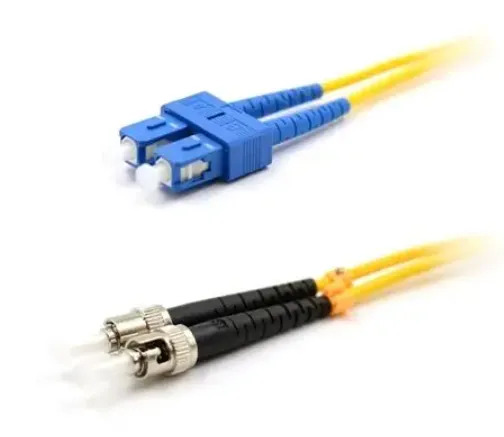
Fiber optic cables play a crucial role in today’s communication systems, supporting everything from home internet to global data networks. Because they transmit information using light rather than electrical signals, fiber optics offer higher speeds, greater bandwidth, and better resistance to interference than traditional copper cabling. However, not all fiber performs the same over long distances. Cable type, equipment quality, and the use of amplification methods all influence how far a signal can travel.
This guide breaks down how fiber optic cables work, the typical distance limits for different fiber types, and the best practices for maintaining strong signal performance across long routes.
How Fiber Optic Cables Transmit Data
Fiber optic cables contain thin strands of glass or plastic that carry light pulses representing digital information. Each strand has a core surrounded by cladding, which helps keep the light contained through continuous internal reflection. This design allows data to travel quickly and with minimal loss.
There are two main varieties of fiber optic cable:
- Single-mode fiber (SMF): Sends light along a single path, making it ideal for very long distances.
- Multi-mode fiber (MMF): Allows several light paths within the core, offering high bandwidth for short- to medium-range connections.
What Affects Fiber Optic Transmission Distance?
Several factors determine how far fiber can carry a signal:
- Fiber type: Single-mode supports far longer distances than multi-mode due to lower dispersion.
- Light wavelength: Signals sent at higher wavelengths—such as 1310 nm or 1550 nm—typically travel farther than 850 nm.
- Power budget: The difference between the transmitter’s output power and the receiver’s minimum sensitivity determines how much loss the system can tolerate.
- Amplification and regeneration: Over long stretches, signals must be boosted or regenerated to counteract loss and distortion.
Distance Capabilities of Single-Mode Fiber
Single-mode fiber is the preferred option for long-range communication because it minimizes signal spreading and attenuation.
Typical distances include:
- Up to 10 km: Common in urban networks without the need for amplification.
- Up to 40 km: Often used across cities; may require optical amplifiers.
- 80 km and beyond: Achievable with amplification and dispersion compensation. Long-haul SMF can span hundreds or thousands of kilometers when supported by undersea repeaters.
Distance Capabilities of Multi-Mode Fiber
Multi-mode fiber is widely used in buildings, campuses, and data centers because it supports high speeds over shorter spans at a lower cost.
Typical MMF distances by grade:
- OM1: Up to ~300 m—suitable for older LAN installations.
- OM2: Up to ~550 m—commonly deployed in campus environments.
- OM3: Up to ~1000 m—optimized for high-speed Ethernet in data centers.
- OM4: Up to ~1500 m—supports very high data rates including 40G and 100G.
Enhancing Fiber Performance Over Long Distances
Even with high-quality fiber, signal degradation becomes a challenge over extended routes. The following methods help maintain performance:
Optical Amplifiers
Devices like Erbium-Doped Fiber Amplifiers (EDFAs) strengthen optical signals without converting them to electrical form. They are widely used in long-distance networks, including undersea cable systems.
Signal Regeneration
For extremely long links, full regeneration may be required. This process converts an optical signal to electrical, cleans it up, and retransmits it optically. It’s effective but more expensive than simple amplification.
Dispersion Compensation
Over long distances, different light components can spread out, causing data distortion. Dispersion compensation modules counter this effect, improving reliability in high-speed systems.
High-Quality Splicing and Connectors
Every splice or connector introduces some loss. Using precision splicing tools and high-grade connectors minimizes these losses and helps maintain signal strength.
Where Fiber Distance Matters Most
Different networking environments have different distance requirements:
Data Centers
Typically use multi-mode fiber for short runs between servers and switches. High-speed standards like OM3 and OM4 support dense, high-bandwidth installations.
Local Area Networks (LANs)
Buildings or campus networks often rely on multi-mode fiber for cost efficiency, covering distances from a few hundred meters to around a kilometer.
Metropolitan Area Networks (MANs)
Citywide networks rely on single-mode fiber for distances up to 40 km or more, often using amplification.
Long-Haul and Subsea Networks
International and intercity connections use single-mode fiber with extensive amplification and regeneration, covering hundreds or thousands of kilometers.
Looking Ahead: The Future of Fiber Distance
Fiber technology continues to advance, bringing greater reach and capacity:
- Improved low-loss fiber reduces signal attenuation.
- Wavelength-Division Multiplexing (WDM) allows multiple light wavelengths to run through a single fiber, greatly increasing capacity.
- Space-Division Multiplexing (SDM) uses multi-core or multi-mode structures to multiply throughput in a single cable.
Choosing the Right Fiber for Your Needs
When selecting a fiber optic solution, consider these key points:
- Distance: Long spans favor single-mode; short connections typically use multi-mode.
- Bandwidth: High-speed applications often require OM3 or OM4 multi-mode.
- Budget: Multi-mode is more economical for short runs, while single-mode is more cost-effective for covering long distances.
- Environment: Outdoor or industrial installations may require ruggedized fiber with special coatings.
Conclusion
Fiber optic cables provide unmatched speed and reliability for modern communication networks. Understanding how distance affects performance—and how different fiber types behave—helps ensure that your network is both efficient and future-ready. Whether you’re connecting equipment inside a building or building out a long-haul infrastructure, choosing the right fiber and supporting technologies is essential for maintaining strong, high-speed communication over any distance.
