



As communication networks continue to expand and demand for high-speed connectivity increases, the infrastructure that supports these systems becomes even more important. One key component of today’s telecommunications landscape is Outside Plant (OSP) fiber cable. Designed specifically for outdoor environments, OSP fiber forms the backbone of long-distance and high-capacity networks.
In this blog, we’ll explore what OSP fiber cable is, the different types available, where it’s used, and what goes into installing and maintaining it.
What Is OSP Fiber Cable?
OSP fiber cable refers to fiber optic cables engineered for outdoor deployment. Unlike indoor cables, these are built to endure harsh environmental conditions such as extreme temperatures, moisture, UV radiation, and physical strain. They are used to extend fiber networks across cities, rural areas, transportation routes, and industrial zones—essentially anywhere long-distance or outdoor connectivity is required.
Common Types of OSP Fiber Cable
Different environments and applications call for different cable designs. Some of the most widely used OSP fiber types include:
Aerial Fiber Cables
Mounted on poles or overhead structures
Built to handle wind stress, ice loading, and sunlight exposure
May be self-supporting or attached to a messenger wire
Direct-Buried Fiber Cables
Placed directly into the ground without conduit
Protected with rugged outer jackets to resist moisture, rodents, and soil pressure
Ideal for rural routes or areas without existing conduit systems
Duct Fiber Cables
Pulled through pre-installed conduits
Easier to replace or upgrade in the future
Common in urban networks with established utility ductwork
Submarine Fiber Cables
Installed under lakes, rivers, and oceans
Equipped with waterproof and pressure-resistant layers
Used for undersea communication links and offshore facilities
Armored Fiber Cables
Feature a metal or high-strength protection layer
Best for areas where digging, heavy equipment, or wildlife pose a threat
Where OSP Fiber Cables Are Used
OSP fiber is deployed across a diverse range of industries and infrastructure systems:
- Telecommunications: Connects central offices, towers, and backbone networks
- Internet Service Providers: Delivers broadband services to homes and businesses
- Smart Grid and Utilities: Supports automation and monitoring of electrical systems
- Government and Military: Ensures secure, long-distance communication
- Transportation: Used in highways, railways, and airports for communication and signaling
How OSP Fiber Cables Are Installed
Installing OSP fiber is a technical process that requires planning, specialized tools, and adherence to standards. Key stages include:
Planning and Surveying
Evaluate the installation route
Identify obstacles like roads, rivers, or buildings
Select the most suitable cable type and installation method
Secure permits and approvals
Cable Deployment
Aerial cables are mounted on poles and secured in place
Buried cables require trenching, plowing, or directional boring
Duct installations use pulling equipment and lubricants to feed fiber into conduits
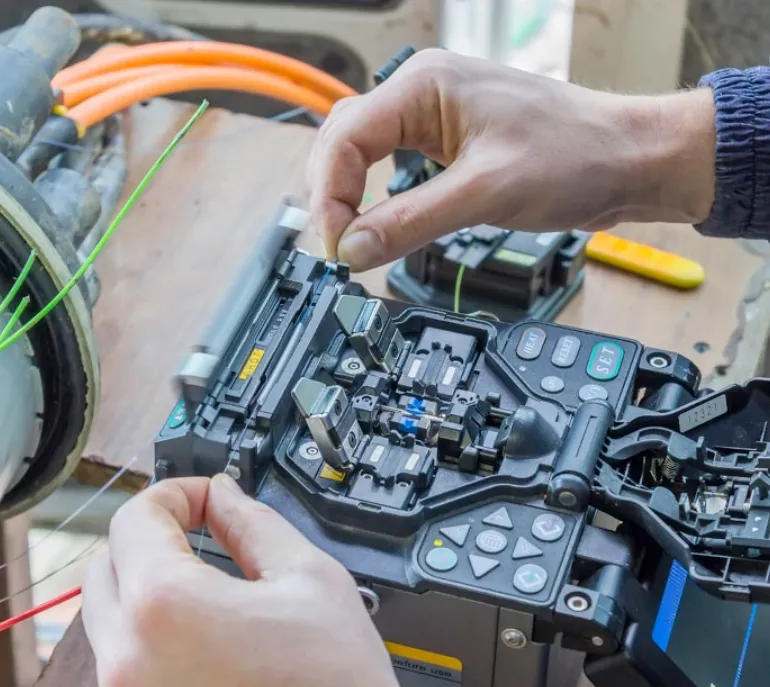
Splicing and Termination
Fiber ends are joined using fusion or mechanical splicing
Connectors are attached for integration with network equipment
Splice closures protect the joints from environmental damage
Testing the Network
Tools such as OTDRs and power meters verify fiber integrity
Technicians identify and correct attenuation issues or breaks
Network acceptance testing is completed before activation
Benefits of OSP Fiber Cable
OSP fiber offers numerous advantages that make it the preferred choice for outdoor networking:
- High bandwidth capacity for internet, TV, and cloud services
- Low signal loss, enabling long-distance data transmission
- Immunity to electromagnetic interference, ensuring stable performance
- Durability, even in severe weather and harsh environments
- Scalability, supporting future growth and higher data demands
Challenges of OSP Deployment
Although highly capable, OSP fiber projects often face challenges such as:
- High initial cost due to materials, labor, and construction
- Complex installations requiring skilled crews
- Regulatory hurdles and right-of-way negotiations
- Difficult access for repairing buried or underwater cables
Maintaining OSP Fiber Networks
Proper maintenance ensures long-term reliability and performance:
Routine Inspections
Monitor cable routes for damage caused by storms, animals, or construction
Check poles and aerial hardware for wear or sagging
Testing the Fiber
Use OTDR to pinpoint faults or signal degradation
Perform attenuation checks to ensure quality
Emergency Repairs
Locate breaks quickly to restore service
Use protective closures to safeguard repaired sections
Upgrades and Expansion
Increase capacity by adding new fibers or replacing aging segments
Update equipment to support higher bandwidth requirements
Final Thoughts
OSP fiber cable is a foundational element of modern communication networks. Its rugged construction, high performance, and ability to cover long distances make it indispensable for telecom carriers, utilities, and large-scale infrastructure projects. While installation and upkeep can be complex, the long-term benefits—speed, reliability, and scalability—far outweigh the challenges.
As the world moves toward faster and more connected systems, OSP fiber will continue to play a central role in delivering high-performance communication across communities and industries.
