



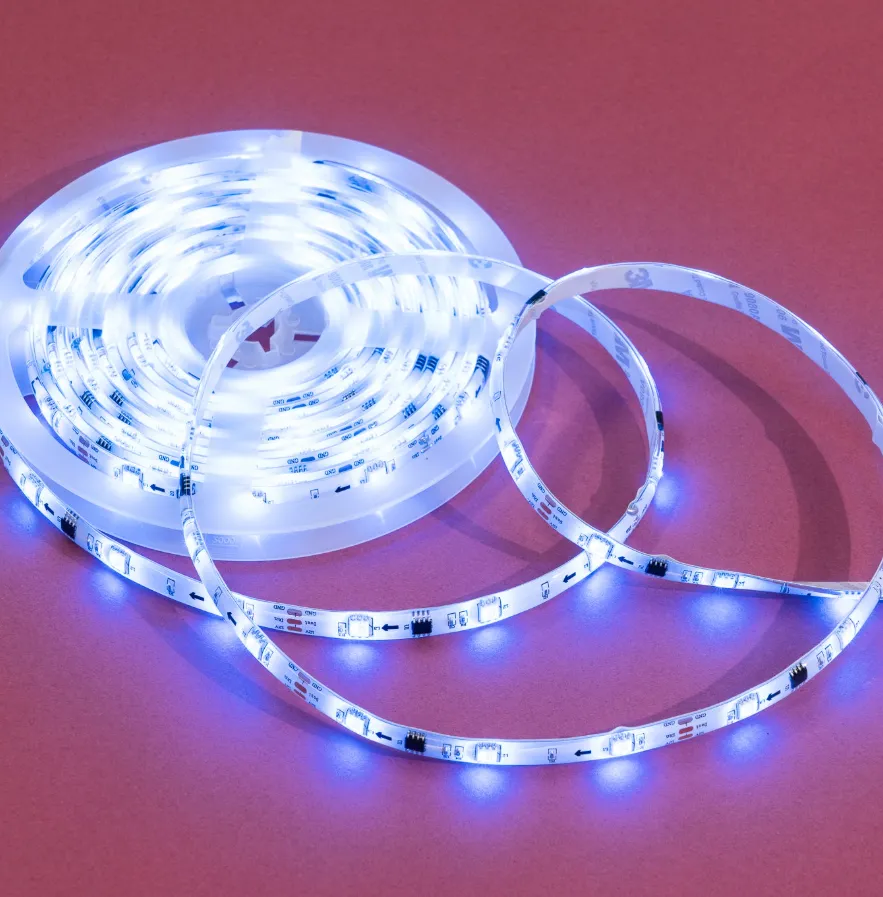
LED strip lighting has become a favourite choice for both homeowners and professionals thanks to its flexibility, low energy use, and modern aesthetic. Whether you want to highlight kitchen worktops, enhance living room ambience, or add subtle backlighting to your TV, LED strips offer an easy and stylish solution. Their cut-to-size design, multiple colour options, and wide range of brightness levels make them suitable for almost any indoor or outdoor project.
This guide covers everything you need to know—from choosing the right strip to installing it safely and effectively—so you can create a polished, energy-efficient lighting upgrade in any space.
What Exactly Are LED Strip Lights?
LED strip lights are slim, flexible circuits fitted with small LEDs that emit light in a wide range of colours and intensities. Their adhesive backing makes installation simple: just peel, stick, and power. Because they bend around corners and can be shortened at marked points, they adapt effortlessly to cabinets, ceilings, wardrobes, shelving, and more.
Key Advantages of LED Strip Lighting
- Highly Customisable
LED strips allow you to tailor your lighting to your environment. You can select warm or cool tones, adjust brightness, or choose colour-changing models for dynamic effects. Their flexible build means they can wrap around curved surfaces, lining edges and corners with clean, continuous light. - Energy Efficient
LED strips use significantly less energy than older lighting options while producing more usable light. They also run cooler, which not only reduces energy costs but also lowers the risk of heat-related issues around furniture and fittings. - Quick and Easy Installation
Many LED strips come with strong adhesive backing, so you can install them in minutes. Plug-and-play kits are available for those who want remote or app-based control without complex wiring. - Long Lifespan and Durable Construction
LED strips typically last tens of thousands of hours. When paired with aluminium mounting channels, they benefit from improved heat dissipation, which helps preserve both brightness and colour accuracy over time.
How to Choose the Right LED Strip Light
Colour Temperature and Type
The look and feel of your space depend heavily on colour temperature. Warm tones around 2700K create a relaxing atmosphere suitable for bedrooms and lounges. Cooler tones near 6500K work well for task lighting or areas that need crisp, clear illumination. If you want something playful or adaptable, RGB or colour-changing strips offer endless possibilities.
Brightness Levels
Brightness is measured in lumens per metre. Low-to-medium output is great for soft accents or under-cabinet lighting, while higher lumen strips work better for task lighting or large feature areas. Comparing LED density and lumens per metre will help you achieve the effect you want.
IP Ratings for Indoor and Outdoor Use
Strips installed in dry rooms typically only need IP20 protection. For bathrooms, kitchens, outdoor seating areas, or garden structures, choose higher ratings like IP44, IP65, or IP67 depending on exposure to moisture.
Customisation and Finishing Touches
LED strips can usually be trimmed at designated points to fit your exact space. For a polished look, conceal them inside aluminium channels with diffusers to soften the light and eliminate visible LED dots.
Power Supplies and Drivers: What You Need to Know
To function correctly, LED strips require a power driver matched to their voltage—most commonly 12V or 24V. Always add a buffer to your power calculation; for example, a strip requiring 60W total should pair with a driver rated around 75W to ensure stable performance.
Longer runs may suffer from voltage drop, causing brightness to fade toward the end of the strip. Avoid this by using higher voltage strips, supplying power at multiple points, or wiring separate runs in parallel.
If you want to dim your strips, ensure the driver is compatible with your chosen control system, whether it’s a wall dimmer, 0–10V control, or a smart home hub.
Installation Tips for a Professional Finish
1. Plan Your Layout
Measure each section carefully and map out where the driver and cables will go. Ensure switches and controls remain accessible.
2. Prepare the Surface
Clean the mounting area thoroughly so the adhesive sticks firmly. Smooth, dry surfaces give the best results.
3. Cut and Connect Correctly
Only cut at marked intervals, and use proper connectors or solder joints. Pay close attention to polarity when wiring.
4. Mount the Strip Securely
Press the strip firmly into place as you peel back the adhesive liner. Use aluminium profiles where possible for heat control and durability.
5. Set Up Controls
If your lighting includes app or remote control, pair the device after installation and adjust brightness or colour settings to suit your space.
Where LED Strips Work Best
- Kitchens: Under cabinets, kickboards, or ceiling coves.
- Living Rooms: Behind TVs, along shelves, or around ceiling recesses.
- Bedrooms: Behind headboards, under beds, or inside wardrobes.
- Bathrooms: Mirror backlighting or under-vanity lighting using moisture-rated strips.
- Outdoor Areas: Decks, pergolas, and steps with fully sealed LED strips.
What to Look for When Buying LED Strips
- Correct wattage and voltage to match your driver
- Suitable lumen output for the intended use
- High CRI for accurate colour rendering
- Consistent colour temperature across the entire reel
- Reliable IP rating for the environment
- Quality accessories such as diffusers, connectors, and mounting profiles
Common Mistakes to Avoid
- Using an underpowered driver
- Ignoring voltage drop on long runs
- Installing strips without proper heat dissipation
- Mixing incompatible dimmers or controls
- Mounting strips on dusty or uneven surfaces
Conclusion
LED strip lighting offers endless creative potential and practical benefits—provided you choose the right components and install them correctly. By focusing on voltage, driver compatibility, brightness, colour temperature, environmental protection, and proper heat management, you can enjoy long-lasting, attractive lighting that elevates any room or outdoor space.
