



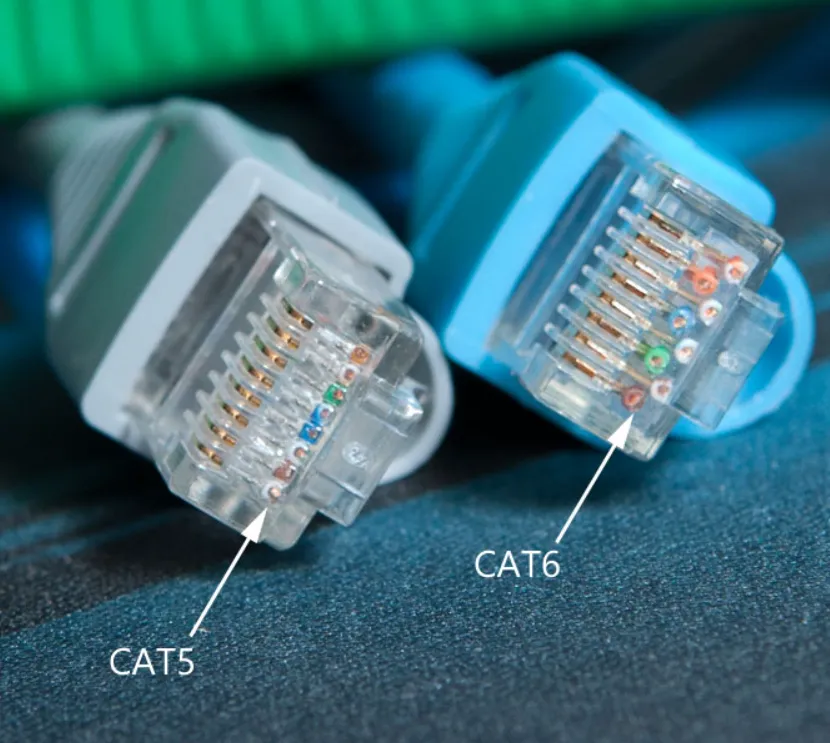
Cables keep modern networks running, allowing our devices to communicate quickly and reliably. Two terms that often get mixed up are patch cable and Ethernet cable. While they look similar, they’re not always used in the same way. Knowing the difference helps you choose the right option for your setup—whether you’re wiring a home office, organising a server rack or setting up a larger network.
What Exactly Is an Ethernet Cable?
An Ethernet cable is the general name for any cable used to create wired network connections. These cables link devices like routers, computers and switches, carrying data through electrical signals. They come in multiple categories—Cat5e, Cat6, Cat6a, Cat7 and Cat8—each designed for different speeds and bandwidth needs.
You’ll find two core construction types:
- Shielded (STP) for reducing interference
- Unshielded (UTP) for everyday environments
- Solid core for long, permanent runs
- Stranded core for shorter, flexible connections
In simple terms, Ethernet cables form the main structure of wired networking.
What Is a Patch Cable?
A patch cable is actually a type of Ethernet cable, but it’s built for short distances and frequent handling. These are the cables you typically use to connect nearby devices—think plugging a laptop into a router or linking a switch to a patch panel.
Patch cables are usually:
- Shorter in length
- Flexible due to stranded conductors
- Factory-terminated with RJ45 connectors
Because they’re easy to move and replace, patch cables are the go-to choice for desks, server racks and quick installations.
How Patch Cables and Ethernet Cables Differ
Although patch cables fall under the Ethernet family, they have clear distinctions.
Purpose
Ethernet cables cover everything from long building runs to permanent installations. Patch cables bridge short distances between two nearby devices.
Length
Ethernet runs may stretch up to 100 metres or more. Patch cables are typically just a few metres long.
Flexibility
Solid-core Ethernet cables are rigid and ideal for fixed installations. Patch cables, made with stranded conductors, are flexible and better suited to areas where cables are moved frequently.
Installation
Ethernet cables often require manual termination during installation. Patch cables come ready-made with connectors attached.
Typical Use Cases
Ethernet cabling is used inside walls, ceilings or conduits. Patch cables live in offices, server rooms and data racks for device-to-port connections.
When You Should Use Ethernet Cables
Ethernet cables are best for:
- Permanent wiring inside walls or ceilings
- Longer connections between rooms or floors
- High-speed networking, especially with Cat6a and above
- Stable wired performance when Wi-Fi isn’t enough
If you’re cabling an office or new building, solid-core Ethernet runs from the networking room to each workspace are the right choice.
When Patch Cables Make More Sense
Patch cables work well for:
- Short, direct links between devices and wall ports
- Server racks, for connecting switches to patch panels
- Temporary setups or testing equipment
- Situations that require frequent plugging and unplugging
In a data rack, for example, patch cables handle all the front-facing connections while the longer Ethernet runs stay hidden and fixed in place.
Common Misunderstandings
- Not all Ethernet cables are patch cables. Patch cables are just one type.
- Patch cables can handle high speeds. As long as the category matches, a short Cat6 patch cable performs just like a long Cat6 Ethernet run.
- Solid and stranded cables aren’t interchangeable. Each type suits different installation environments.
Choosing the Right Cable for Your Needs
To decide which cable you need, consider:
- Distance: Patch for short runs, Ethernet for long.
- Flexibility: Stranded cables for movement, solid for permanent placement.
- Category: Match the speed requirements of your network—Cat6 suits most homes, while Cat8 fits high-performance environments.
An Example: Setting Up a Small Office Network
Imagine wiring a small office:
- You would install solid-core Ethernet cables through the walls to each room.
- At the central network rack, patch cables would connect the patch panel to the switch.
- Employees would then use patch cables to connect their devices to wall sockets.
This combination balances durability, organisation and flexibility.
Final Thoughts
Patch cables and Ethernet cables each play an important role in building reliable networks. Ethernet cables create the long-distance backbone, while patch cables provide the flexible, short-range links between devices. Understanding how they differ ensures you choose the right solution for your home, business or data centre—keeping your network organised, efficient and performing at its best.
