



In the fast-moving world of data networking, choosing the right cable is crucial to ensure speed, reliability, and low interference. One cable type that has become particularly important in modern high-speed data environments is the Twinax cable. Whether you’re setting up a data center or just want to understand the basics, this guide will break down what Twinax is, how it works, and where it fits best.
What Is a Twinax Cable?
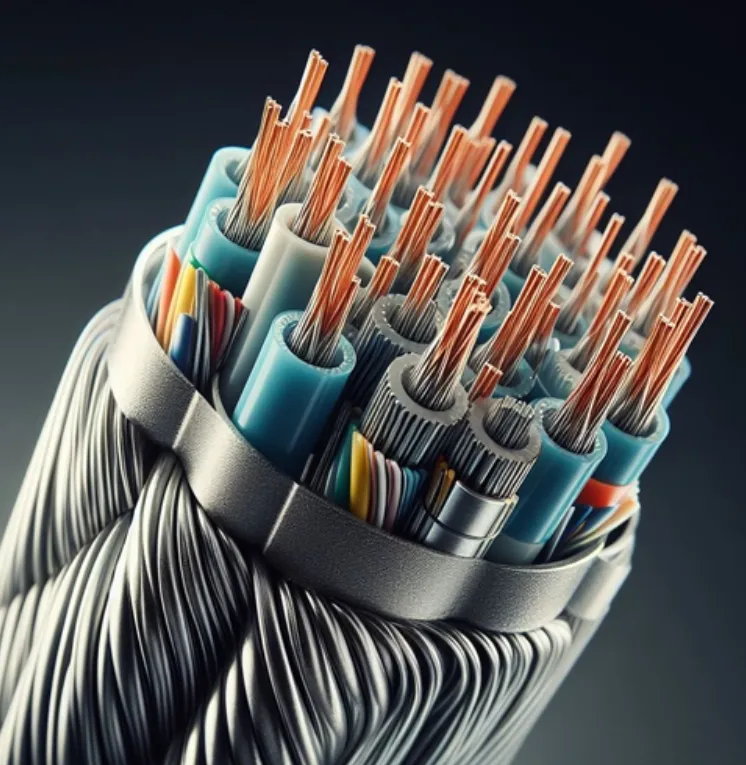
Twinax, short for twin axial cable, consists of two insulated conductors twisted together and surrounded by a shielding layer. These conductors carry differential signals—equal and opposite electrical currents—that effectively cancel out external noise and electromagnetic interference (EMI).
This design makes Twinax ideal for transmitting data at very high speeds over short distances, which is why it’s frequently used in data centers, enterprise networking, and high-performance computing systems.
Inside the Structure of a Twinax Cable
A Twinax cable’s performance comes from its layered design:
- Dual Inner Conductors: Typically copper, they carry the signal and its inverse.
- Dielectric Insulation: Surrounds each conductor to maintain spacing and electrical isolation.
- Shielding Layer: A metallic braid or foil that protects against EMI and preserves signal quality.
- Outer Jacket: Provides mechanical protection and flexibility, typically made of durable plastic or rubber.
This construction allows Twinax to handle high-frequency signals with low signal loss and minimal interference.
How Twinax Cables Transmit Data
Twinax cables use differential signaling, meaning one conductor carries the main signal and the other carries its inverse. When the signal reaches the receiving end, the system measures the difference between the two. Any interference that has affected both conductors equally is canceled out, leaving a clean, accurate signal.
This mechanism makes Twinax extremely effective for maintaining signal integrity in environments with significant electrical noise.
Common Applications of Twinax Cables
Twinax cables serve a variety of specialized purposes across industries:
- Data Centers: Commonly used in 10G, 25G, 40G, and 100G Ethernet connections for short-distance data transfer between servers, switches, and storage devices.
- Direct Attach Cables (DACs): Often built using Twinax, DACs connect equipment within racks. They offer low latency and power consumption compared to fiber optics.
- IBM Systems: Historically used in IBM mainframes like the System/3x and AS/400 to connect terminals and peripherals.
- Audio/Video Applications: Twinax’s ability to reduce interference also makes it suitable for professional broadcasting and AV systems.
Advantages of Using Twinax Cables
1. Cost Efficiency
Twinax is considerably more affordable than fiber optic solutions for short-range connections, as it doesn’t require expensive transceivers.
2. Low Power Usage
It consumes less power than optical systems while maintaining low latency—ideal for high-performance and low-latency environments.
3. Excellent Noise Resistance
The differential signal design and shielding provide exceptional protection against electromagnetic interference, ensuring stable and consistent data flow.
4. Easy Installation
Unlike fiber optics, Twinax is plug-and-play—no splicing or special handling is needed, making it simple to deploy and maintain.
Limitations of Twinax Cables
Despite its advantages, Twinax isn’t perfect for every scenario:
- Limited Distance: Twinax performs best over short spans (typically under 10 meters). For longer runs, fiber optic cables are more effective.
- Flexibility Issues: Its thick shielding makes it less flexible and harder to manage in tight spaces.
- Heavier Build: The metallic components add weight, which can be challenging in large-scale installations.
Twinax vs. Coaxial Cable
While Twinax and Coaxial cables might look similar, they serve different purposes:
- Number of Conductors: Twinax has two conductors; coaxial has one.
- Signal Type: Twinax uses differential signals for noise cancellation, while coaxial uses single-ended transmission.
- Use Cases: Coaxial cables are widely used for TV and radio broadcasting, whereas Twinax is optimized for data networking.
When to Choose Twinax
Twinax is best suited for setups that require:
- Short, high-speed connections (typically less than 10 meters).
- Low power consumption and reduced latency.
- Cost-effective alternatives to fiber for rack-to-rack or switch-to-server connections.
- Reliable performance in environments with potential electromagnetic interference.
In modern data centers, Twinax is frequently used in top-of-rack (ToR) configurations, linking servers to switches within the same rack for maximum speed and efficiency.
Conclusion
Although it may not be as well-known as Ethernet or fiber optic cables, Twinax plays a vital role in today’s high-speed networking environments. Its combination of low latency, strong EMI resistance, energy efficiency, and affordability makes it an excellent solution for short-distance data transmission.
As network infrastructures continue to evolve, Twinax remains a dependable and cost-effective choice for ensuring fast, reliable communication within data centers and enterprise systems.
