



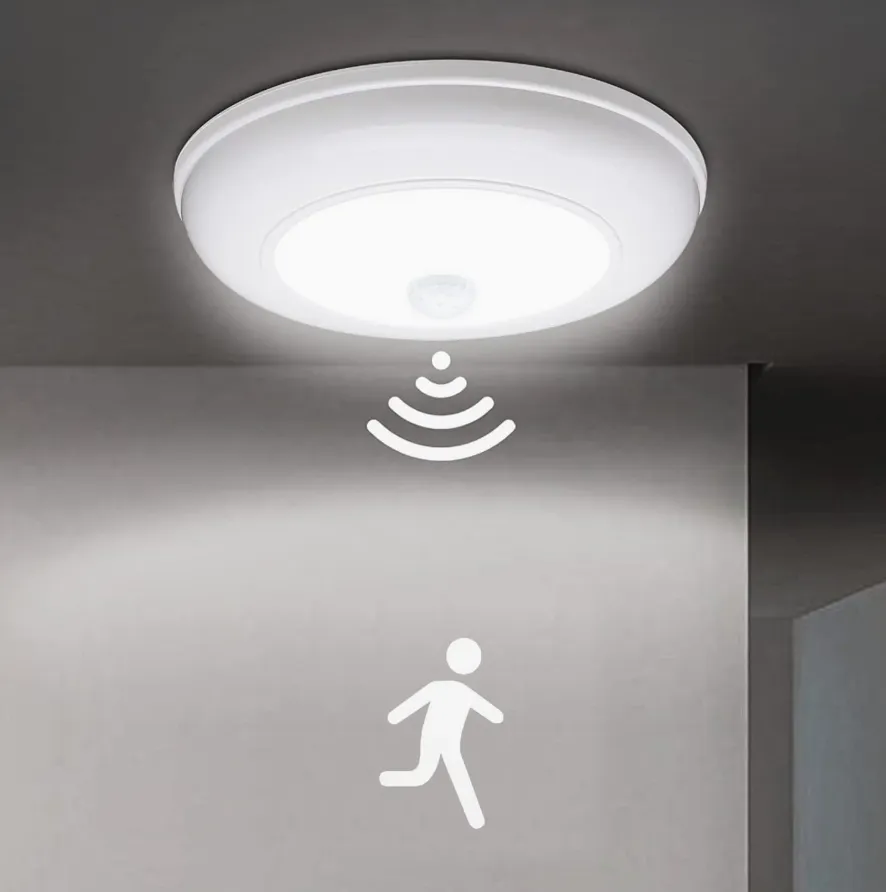
Smart lighting has become an essential part of modern living, and motion-activated lights are one of the most practical upgrades you can make. With the potential to significantly reduce energy usage and improve both safety and security, motion sensors offer a simple yet powerful way to enhance lighting in homes, workplaces, and outdoor areas.
This guide explores how motion detectors work, the different types available, and what to consider when choosing the best option for your space.
What Are Motion Sensors for Lights?
Motion sensors for lighting automatically switch lights on when movement is detected within a set area. These devices monitor changes in heat, sound, or physical motion and activate lighting instantly. Once movement stops, the lights remain on for a preset time before shutting off again. This automated cycle ensures light is only used when needed, making motion sensors a valuable addition to both residential and commercial environments.
They are particularly effective in high-traffic spots such as hallways, stairwells, exterior paths, storage areas, and entrances.
Benefits of Motion Sensor Lighting
Installing motion-activated lighting brings several advantages:
Improved Security
A properly illuminated exterior makes properties less appealing to intruders. Well-placed lights can reduce the likelihood of break-ins and enhance visibility around entry points.
Lower Energy Usage
Lights switch on only when necessary, helping reduce electricity bills and preventing wasted power—ideal for environmentally conscious households and businesses alike.
Greater Convenience and Safety
Hands-free lighting is especially useful in dark corridors, garages, and utility rooms, reducing the risk of falls and eliminating the need to fumble for switches.
Extended Bulb Life
By reducing unnecessary operating time, motion sensors help prolong the lifespan of bulbs, including LEDs, and decrease maintenance costs.
Common Types of Motion Detectors
Modern motion sensors use a variety of technologies, each with its own strengths:
Passive Infrared (PIR) Sensors
These detect changes in infrared energy from people or animals. PIR sensors are popular for indoor spaces due to their accuracy and efficiency.
Microwave Sensors
Microwave detectors send out low-power waves and measure how they bounce back. They offer wide coverage and can detect movement through certain materials, making them ideal for larger or more complex commercial layouts.
Dual-Technology Sensors
Combining methods such as PIR and microwave, these sensors require both systems to detect movement before activating the light. This dual approach helps minimise false triggers from minor environmental changes.
Other Options: Ultrasonic and Tomographic Sensors
Ultrasonic sensors use sound waves to detect motion, while tomographic sensors utilise radio waves to monitor activity across multiple rooms or walls, suitable for intricate building designs.
Best Places to Install Motion Sensors
Where you position motion sensors has a major impact on their effectiveness:
Indoor Locations
- Hallways and staircases for safe movement
- Bathrooms to reduce manual switching
- Storage areas, utility rooms, and garages for efficient lighting
Outdoor Locations
- Driveways for safer parking at night
- Front and back entrances to improve visibility
- Gardens and walkways for added security and convenience
What to Consider When Buying Motion Sensors Online
Before selecting a motion sensor, keep these features in mind:
Detection Distance and Angle
Make sure the sensor’s range and coverage angle suit the size and layout of your target area.
Adjustable Sensitivity
Sensitivity settings help reduce false activations caused by pets, foliage, or passing vehicles.
Load Compatibility
Verify that the sensor supports the wattage and type of lighting you plan to use.
Weather Resistance
Outdoor sensors should have an appropriate IP rating—IP44 or higher is recommended for protection against moisture and dust.
Timer Controls
Look for models that allow you to adjust how long the light stays on after movement stops.
Manual Override
Useful when you need the light to stay on continuously for cleaning, gatherings, or maintenance.
Top-Rated Motion Sensors Available Online from Meteor Electrical
Here are some popular motion sensors designed for a range of indoor and outdoor applications:
1. THEBE 360° Recessed PIR Sensor
A sleek option for ceiling installations, offering broad detection and easy adjustment.
- 360° coverage
- 6-metre range
- Adjustable timer (3 seconds to 15 minutes)
- Sensitivity from 3 to 2,000 lux
- IP20 rating
2. Forum Loca 360° Surface-Mounted PIR Sensor
A versatile unit suitable for renovations or new builds in both domestic and commercial settings.
- 360° detection
- 6-metre range
- Timer adjustable from 10 seconds to 7 minutes
- IP20 rated housing
3. Zinc Dion IP65 Adjustable Motion Sensor (White)
Designed for outdoor reliability, perfect for entrances, driveways, and external walls.
- LED compatible
- 180° detection
- 5–12 metre range
- Timer adjustable from 10 seconds to 15 minutes
- IP65 weather protection
4. Zinc Dion IP65 Adjustable Motion Sensor (Black)
A discreet black version offering the same robust features as the white model.
- High weather resistance
- Manual override
- Ideal for contemporary exterior designs
Conclusion
Motion-activated lighting offers a smart, efficient way to brighten indoor and outdoor areas while enhancing both safety and security. By choosing a sensor with the right features, coverage, and durability, you can create a lighting system that responds effortlessly to daily activity and reduces unnecessary energy use.
